When organisations place records into offsite storage, one of the first decisions they need to make is how those records will be catalogued. This simply means how the records are listed on our system so they can be found and requested later. Every organisation has different needs, so they manage their files in different ways.
As Office Manager at Archive-Vault, I deal with client requests every day. Some clients request by box and others request by file. Some clients may request from a range of boxes, but other clients know exactly where to look for what they need. Clients with a full file inventory on our system can search for the file itself, so it doesn’t matter which box it belongs to.
The way your records are catalogued affects how long it takes your team to pinpoint the file they want to request. In this article, we’ll look at the pros and cons of each approach to help you decide what suits your organisation.
What’s the difference between box and file indexing?
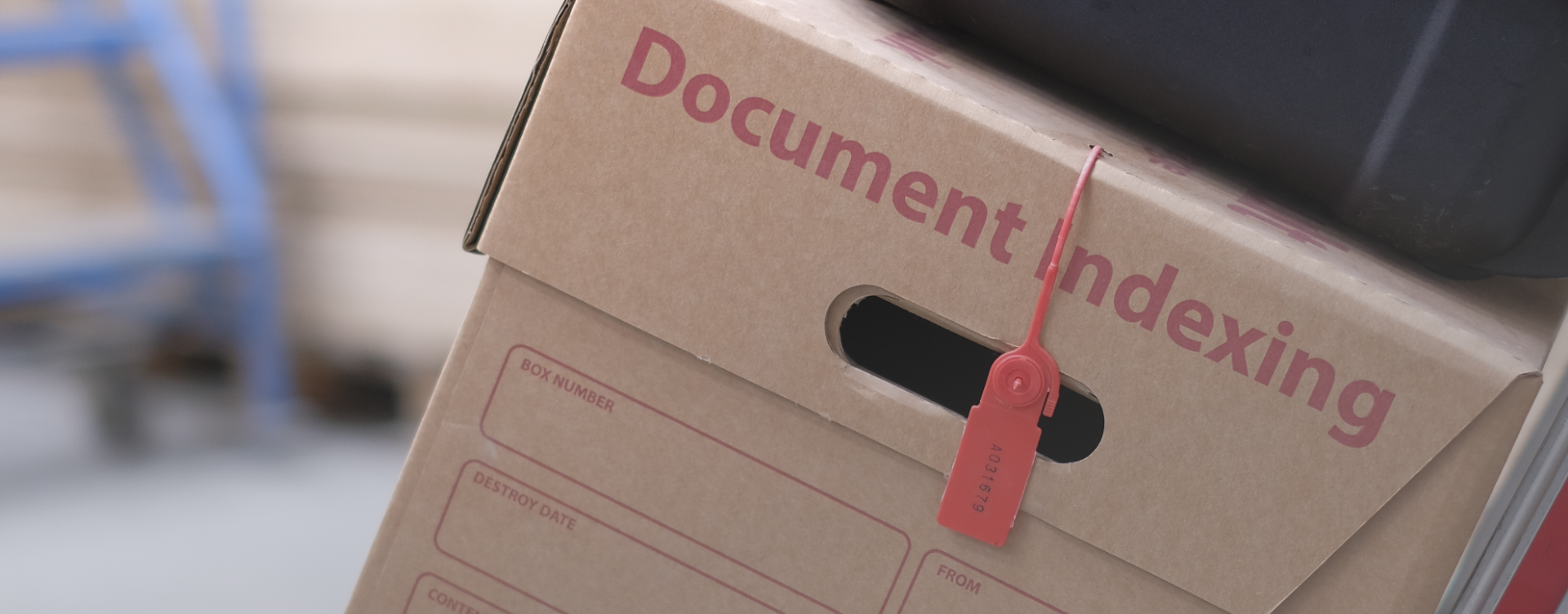
Regardless of the method, every box you send us is logged in our system, so we always know where it is in our facilities. What changes is the level of detail. Box-level indexing gives us a brief description of what’s inside each box, i.e ‘purchase invoices H-Z 2025’. File-level indexing tells us exactly what’s inside it. Here’s how each one works in practice. There are two main methods:
Box-level indexing: Indexing on a box level, we record the information from each box and input it into our records management software.
However, we don’t list the individual files in each box. Your organisation keeps its own record of which files went into the box. When you need a file, you check your records, and notify us which box to search in order to locate the file(s).
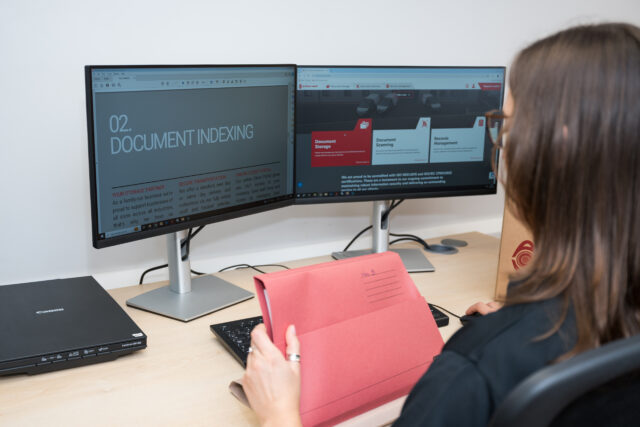
File-level indexing: Indexing on a file level, each file is catalogued and recorded within our records management software. This gives you a detailed inventory of everything you have in storage.
You can ask for a file by its name, reference number, or anything that is relevant to your business. We’ll tailor the indexing to suit your needs. You don’t need to know which box it’s in, because our system already does.
A real time comparison
To understand the long term impact of each approach, I looked at two of our legal clients with similar record storage needs. One firm chose box-level indexing, and the other chose file-level indexing.
Firm A (Box-level)
Firm A keeps a list of its files on its own internal system. Each file gets a reference number before it goes into a box, and the firm’s admin team records which box it went into. We don’t hold any details about the files until the firm requests one.
Over the last 12 months, Firm A has had 78 no-finds. (A no-find is when we open the box a file is listed against and the file isn’t there.) In each case, the file has been recorded against the wrong box on the firm’s own system, or it may not have been there in the first place.
To track those files down, the firm asked us to carry out 17 separate searches (This is where our team goes through a range of boxes to look for a missing file). Between them, the searches covered 436 boxes.
Firm B (File-level):
Firm B also maintains its own inventory, but opted for our file indexing service for added confidence and compliance for their records.
Over the last 12 months Firm B has had 10 no-finds and hasn’t needed a single search.
Looking beyond the initial cost
At first glance, box-level indexing may look like the cheaper option. It needs less preparation, so we can complete the intake quickly and at a lower upfront cost.
Over time, the figures tell a different story. Firm A has spent over 60% more on searches than Firm B paid to index its entire archive. Firm A’s search costs will also continue to grow.
Search fees are only part of this picture. Each no-find also takes up your team’s time. Someone has to look into what went wrong, update the internal system and arrange a search with us, meanwhile a client or colleague may be left waiting for an answer.
For a law firm, or any business that relies on accurate records, these delays make all the difference. Over time, that can affect how clients perceive the business too.
With file-level indexing, most of these hidden costs disappear. When you ask for a file, we can see exactly where it is, and you get it back without the extra admin.
Comparing the options
| Box-level indexing | File-level indexing |
| Lower initial cost | Complete visibility of stored records |
| Faster initial project completion | Faster file retrieval |
| Suitable for lower-access archives | Greater certainty and traceability |
| Risk of misplaced or incorrectly recorded files | Quick and simple file requesting and tracking |
| Potential future search costs | Reduced need for investigations and searches |
| Reliance on internal databases beingmaintained accurately | Highly detailed, auditable inventory |
Which approach is right for you?
Both methods have their place. The right one for you depends on how you use your records.
Box-level can be an appropriate solution for organisations with large archives that are rarely accessed and where keeping initial costs to a minimum is the primary objective.
However, for businesses that need confidence in their records, regularly request files, or want to reduce the risk of time-consuming searches in the future, file-level indexing often delivers significant long-term value. The ability to identify, request and track individual files quickly can save both time and money while providing greater assurance that your records are exactly where they should be.
Plus, with our client portal, you can view and manage your entire inventory online. You can see the live status of a file, the location, the date it was retrieved and who by. There is also an option to download the history so you can see the full audit trail.
File indexing does require additional time from the outset, but for many organisations the benefits continue long after the boxes have gone into storage. Greater visibility, improved record accuracy, faster retrievals, and reduced search costs can all contribute to a more efficient document management strategy.
Getting started with file indexing
Our file indexing service is available to both new and existing clients. We can index your files as they come into storage, or add file-level detail to boxes we already hold for you.
Get in touch to talk through your options, and we’ll give you a free, no obligation quote. You can give us a call on 10603 720722 or email info@archive-vault.co.uk.