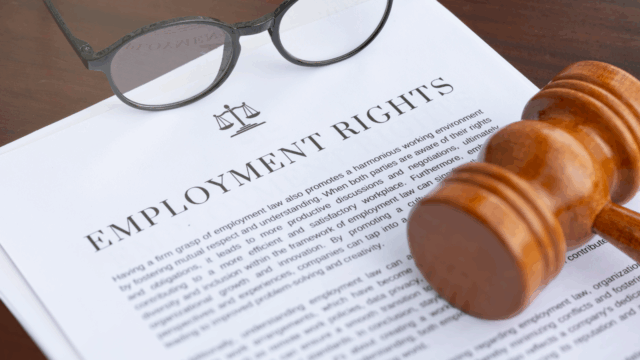
The Employment Rights Act 2025 (“ERA 2025”) is the most far-reaching reform of employment law in decades. Receiving Royal Assent on 18 December 2025, the Act forms part of the government’s Make Work Pay agenda and introduces wide-ranging new rights for workers alongside significantly strengthened enforcement powers.
From 2026 onwards, employers face not only new obligations around pay, leave and dismissal, but also a much greater expectation to prove compliance through accurate, accessible and securely stored records. Central to this shift is the introduction of a new regulator: the Fair Work Agency (FWA).
What is the Employment Rights Act 2025?
The ERA 2025 introduces more than 28 reforms, reshaping employment practices across the entire employee lifecycle. Its objectives include:
- Enhancing job security
- Strengthening worker protections
- Increasing transparency and accountability
- Improving enforcement of employment rights
The legislation applies across England, Wales and Scotland, with changes being implemented progressively through 2026 and 2027.
Key changes employers should be aware of
Day-one rights
From April 2026, key UK employment rights take effect from the first day of employment, removing long‑standing qualifying periods and increasing employer obligations.
Employees now qualify for Statutory Sick Pay (SSP) from day one of sickness, with the previous three unpaid waiting days removed and the lower earnings limit removed. This means SSP applies immediately, including for new starters and lower‑paid workers, increasing short‑term absence costs for employers.
In addition, paternity leave and unpaid parental leave become day‑one rights. Employees no longer need 26 weeks’ service for paternity leave or one year’s service for unpaid parental leave. While statutory pay rules largely remain unchanged, the right to take leave now applies from the start of employment.
Overall, these reforms mark a clear move towards immediate workplace protections. Employers must ensure contracts, policies, payroll systems and manager guidance are fully updated, as compliance now starts on day one, not after probation or qualifying service.
Unfair dismissal reform
From 1st January 2027, employees will gain earlier access to ordinary unfair dismissal rights, with the qualifying period reduced from two years to six months. At the same time, the statutory compensation cap will be removed, allowing tribunals to award compensation based on actual losses rather than a fixed limit.
This significantly increases employer exposure, particularly where dismissals occur during early employment or probation. As a result, a robust probation process, a clear and well explained reason for dismissal, and accurate record keeping will be essential from the first six months of employment, rather than something employers can rely on later in the employment relationship.
Fire and rehire restrictions
Fire and rehire is the practice of dismissing employees and re‑employing them on new, often less favourable, terms. From 1st January 2027, the Employment Rights Act 2025 will introduce stronger protections to address unfair use of this practice, increasing protection for employees. For employers, this raises the legal and financial risk of unfair dismissal claims where dismissal is used to force contractual change without proper consultation or justification.
Collective redundancy penalties
Failure to consult correctly on collective redundancies may now result in penalties of up to 180 days’ pay per affected employee, which is double the previous maximum. This significantly increases financial risk for employers and underlines the importance of early, meaningful consultation and strict compliance with collective consultation rules.
The Fair Work Agency
The Fair Work Agency (FWA) was formally launched on 7th April 2026 as an Executive Agency of the Department for Business and Trade. It replaces and consolidates several existing enforcement bodies, including:
- HMRC’s National Minimum Wage Unit
- The Gangmasters and Labour Abuse Authority
- The Employment Agency Standards Inspectorate
- The Office of the Director of Labour Market Enforcement
The aim is to create a single, more powerful enforcement body responsible for ensuring compliance with employment law across the UK.
What does the Fair Work Agency enforce?
The Fair Work Agency (FWA) is responsible for enforcing a broad range of labour market protections. This includes ensuring compliance with the National Minimum and Living Wage, Statutory Sick Pay and holiday entitlement including holiday pay. It also includes employment agency regulations, safeguards against labour exploitation and modern slavery, as well as overseeing financial penalties issued by employment tribunals.
Importantly, the introduction of state enforcement for holiday pay and holiday record‑keeping marks a major change for employers, bringing these obligations under direct regulatory scrutiny for the first time.
Enforcement powers and inspections
The Fair Work Agency has extensive investigative powers, including the ability to:
- Request and seize employment records (contracts, pay data, holiday records)
- Conduct unannounced inspections
- Enter business premises, including with a warrant where necessary
- Issue enforcement and underpayment notices
- Initiate civil or criminal proceedings
- Recover enforcement costs from non-compliant employers
Failure to cooperate or produce required documentation can expose businesses to criminal prosecution and hefty fines.
Document retention under the Employment Rights Act 2025
Mandatory holiday record-keeping
From 6 April 2026, employers are legally required to keep adequate records demonstrating compliance with:
- Annual leave entitlement
- Holiday pay calculations
- Carry-over of leave
- Payments in lieu of unused holiday on termination
These records must be retained for six years. The Fair Work Agency has explicit responsibility for enforcing these duties and may request records during inspections or investigations.
Why secure document storage matters more than ever
With the FWA’s powers, employers need to ensure that their records are accurate, easy to retrieve in the event of an inspection or audit and securely stored in line with UK GDPR and Data Protection Act and other relevant compliance requirements. Adding a retention date to the records will ensure they are only retained for as long as legally necessary before authorising them to be securely destroyed.
Poor record organisation, misplaced files or reliance on storage or archiving methods without following process may expose organisations to legal and financial risks.
How Archive-Vault can help
Working with a professional records management provider such as Archive-Vault can support businesses by:
- Implementing compliant retention schedules, including six-year statutory rules
- Providing secure, auditable document storage
- Enabling fast retrieval during Fair Work Agency inspections
- Supporting GDPR and Data Protection Act compliance
- Managing confidential destruction once retention periods expire
In a compliance-led environment, having a trusted partner to safeguard employment records can significantly reduce compliance risks.
The Employment Rights Act 2025 marks a shift not only in workers’ rights, but in how strongly those rights are enforced. With the Fair Work Agency now active, employers must be able to demonstrate and evidence compliance.
Robust document retention and secure storage are no longer optional good practice; they are central to legal compliance. Reviewing your records strategy and considering specialist support from a records management partner such as Archive-Vault can help protect your organisation as the new enforcement landscape takes shape.
For more information on secure document storage and retention solutions, call us on 01603 720722 or send an enquiry online today.